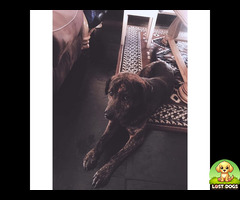
1 Lost Dogs in German Shepherd (Alsation), Himeville
Lost or Found a German Shepherd in South Africa?
German Shepherds are one of South Africa's most trusted and widely owned breeds — working dogs, family guardians, and loyal companions. With 11 active reports on Lost Dogs SA right now, GSDs go missing for reasons that differ from smaller breeds: they may follow a familiar route and get disoriented, bolt during thunderstorms or fireworks, or be picked up by well-meaning security or community members who assume the dog is a working animal.
Why German Shepherds go missing
- Fear reactions. Thunderstorms, fireworks, and loud noises can send a GSD into flight mode — they may clear fences or break through gates in a panic.
- Follow familiar routes. German Shepherds are territorial and routine-driven. A dog that escapes may follow a route it walks daily — to the park, school, or previous home.
- Picked up by strangers. Because GSDs are associated with security and working roles, a loose German Shepherd may be assumed to belong to a security company, estate, or farm and be taken in by someone trying to help.
- Gate and fence escapes. A motivated German Shepherd can jump surprisingly high or push through a gate that wasn't properly latched.
If your German Shepherd is lost
- Walk or drive your dog's daily routes. German Shepherds follow familiar paths — check the routes you walk together, local parks, school fields, and nearby open spaces.
- Alert all security companies and guards in your area. GSDs are often spotted by patrol vehicles and guards. Give them a photo and your phone number — they cover ground you can't.
- Check industrial areas and open land. German Shepherds can cover 5–10km quickly and may end up in factory grounds, warehouses, or empty plots.
- Contact SAPS and local CPF groups. A large loose dog may be reported to police or community policing forums before it's reported to a shelter.
- Call all vets and shelters within 10km. German Shepherds are distinctive — vets remember them. Someone may have already dropped your dog off.
- Post a clear, recent photo. Show the full body and face — coat colour, ear set, and markings help distinguish your dog from other GSDs.
- Report on Lost Dogs SA now. Report a lost German Shepherd →
If you found a German Shepherd
- Approach calmly and don't chase. A loose German Shepherd may be scared, not aggressive. Avoid direct eye contact at first, crouch down to reduce your size, and use a calm voice. Don't run after the dog — it will outrun you.
- Check the immediate area for an owner searching. German Shepherds rarely stray more than 2–3km unless panicked — the owner may be calling nearby.
- Get the dog to safety. If the dog approaches or allows handling, use a lead or a makeshift slip-lead. Keep children and other animals away until you know the dog's temperament.
- Check for a microchip. Any vet will scan free of charge. Working-line and breeder GSDs are almost always microchipped.
- Check the collar. Look for a tag with a phone number. Many GSDs in SA wear personalised or engraved collars.
- Post a found report here. Report a found German Shepherd → — a GSD's owner is almost certainly searching right now.
- Verify ownership carefully. German Shepherds are valuable and sometimes targeted for theft. Ask anyone claiming the dog to show photos on their phone, vet records, microchip paperwork, or describe a unique feature — ear shape, coat pattern, or a specific scar.
Identifying a German Shepherd
- Size: Medium to large — 22–40 kg, standing 55–65 cm at the shoulder. Males are noticeably larger than females.
- Coat: Double coat — dense undercoat with a straight, harsh outer coat. Common colour patterns: black and tan (most common in SA), black and red, sable (agouti, with banded hairs giving a wolf-like grey-brown appearance), solid black, and occasional white or cream. Working-line dogs often have a stockier build and darker sable coats.
- Head: Long, wedge-shaped muzzle, black nose, dark almond-shaped eyes. Ears are large, pointed, and carried erect — puppies' ears may flop until 4–6 months old.
- Body: Long, muscular body with a slightly sloping back. Deep chest, strong straight legs, bushy tail that hangs in a slight curve when relaxed.
- Markings: Most have a black saddle or blanket across the back with tan/red on the legs, chest, and face. A black mask on the face is common.
Microchipping is essential for German Shepherds. Their size and strength mean collars can break or slip off. If your GSD is not yet microchipped, do it — and keep your contact details up to date on the microchip registry.
Need more help? How to find a lost dog fast · Steps when your dog goes missing · Prevent your dog from getting lost · Gauteng · Johannesburg · Pretoria · Cape Town
Browse German Shepherd (Alsation) lost dog listings in South Africa. Use the filters to refine by breed, location, and date posted.
Filter results
Himeville
Chubb
Missing: 2 months ago